
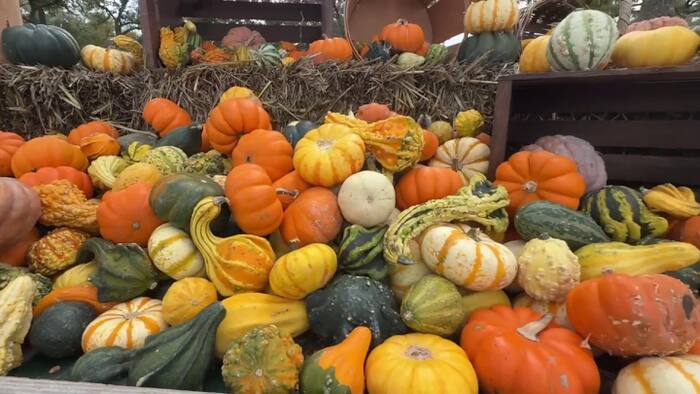
Nothing says it’s finally fall quite like a trip to the pumpkin patch.
Whether you’re searching for the perfect pumpkin to carve, something smaller for the kitchen, or just a backdrop for a fall family photo, there are plenty of pumpkins to choose from around the San Antonio area.
But before the pumpkins can make it to the patch, the weather plays an important role in determining what makes it out into the field.
Pumpkins might be the ultimate fall season staple, but growing them is actually super tricky. The plants are pretty sensitive if they’re planted too early — they get hit by spring cold, and even a little frost can kill the vines. Local farmers have to time everything perfectly to keep them safe from freezing temps so we can get that perfect harvest.
Extreme summer heat and plentiful sunshine can stress pumpkin plants, causing them to wilt and drop flowers, which disrupts the pollination process essential for fruit production.
Tammy Hoss, owner of the Bulverde Pumpkin Patch, says, “If the sun hits it for even just a point in the day, we can start to see some spoilage on them.”
This makes summer weather a critical factor in determining the quality and volume of the harvest that eventually arrives at local pumpkin patches.
However, excessive moisture presents its own set of challenges. Saturated soil can hinder pumpkin production by delaying fieldwork and elevating the risk of disease. Furthermore, cold, damp soil during the early stages of growth can lead to poor germination and seed rot.
“Between 20 and 24 inches are ideal for pumpkin growth in the fields,” she says, “and they know if they need more too. Pumpkins are very smart.”
For growers, that means the timing and amount of rainfall can matter from planting all the way through harvest.
Where pumpkins are grown can make a difference in the weather they experience along the way. The work doesn’t stop when the pumpkins arrive. Keeping them away from direct sun and off the ground can help protect them at the patch.
“Once they get here, like I said, it’s just really keeping them out of the sun, keeping them up off the ground. So you’ll notice that they’re all on hay bales and they’re all on pallets because if they sit on the ground, they can rot that way,” Hoss said.


